
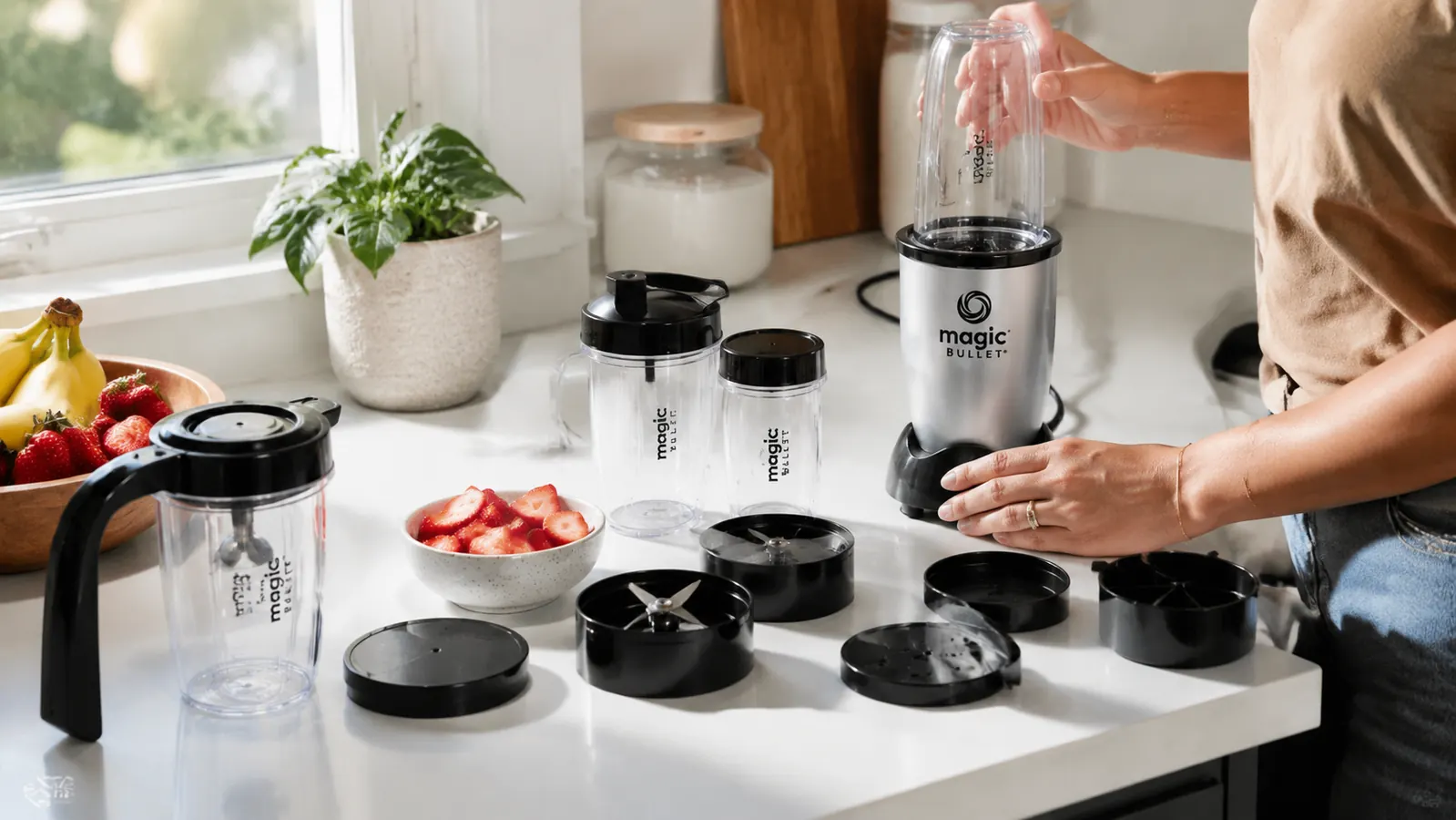
If you have been trying to pick between the Magic Bullet and the NutriBullet, you have probably already noticed something a little funny: they are made by the same company. Same parent brand, same general idea, sold side by side on Amazon with a pretty significant price gap. So what exactly are you paying for when you step up to the NutriBullet? And for someone cooking in a small kitchen on a real budget, does the extra cost make sense? I have used both in a galley kitchen that measures about 7 feet wall to wall, and my answer is that the right blender depends entirely on what you are actually blending, not on which one has the flashier box.
The short answer: for most small-kitchen cooks blending smoothies, sauces, dips, and the occasional frozen drink, the Magic Bullet 11-Piece Set at the budget end does the job and then some. The NutriBullet is a better tool if you are blending dense greens, frozen fruit, or nut butter daily and want a bigger cup. But it costs roughly twice as much, comes with fewer pieces, and takes up more vertical space on your counter. For a space-constrained, budget-aware kitchen, the Magic Bullet wins the value argument by a wide margin.
| Spec | Magic Bullet (11-Piece) | NutriBullet (600W) |
|---|---|---|
| Price | Moderate cost | Mid-range |
| Motor Power | 250 watts | 600 watts |
| Height (on counter) | Approx. 13 inches | Approx. 15.5 inches |
| Largest Cup Size | 24 oz tall cup | 32 oz cup |
| Included Pieces | 11 (2 cups, 4 mugs, lids, rings, blade, flat blade) | 3 (1 cup, 1 lip ring, 1 extractor blade) |
| Flat Blade for Dry Grinding | Yes, included | No (separate purchase) |
| Cord Storage | No integrated storage | No integrated storage |
| Weight (base unit) | Approx. 2.4 lbs | Approx. 2.7 lbs |
| Best For | Smoothies, sauces, soups, dips, dry grind | Dense greens, nut butter, daily heavy blending |
Where the Magic Bullet Wins
The most underrated advantage of the Magic Bullet is the 11-piece set. You get two cups (a 18-ounce short cup and a 24-ounce tall cup), four mugs with handles, a cross blade for wet blending, a flat blade for dry grinding spices and coffee, and a full set of to-go lids. That is a lot of daily utility for the price. With the NutriBullet at the same price tier, you typically get one cup, one blade, and one lip ring. If you want extra cups or a flat blade, those cost extra.
The second win is price, plain and simple. When counter space is tight and a full-size blender is already out of the question, choosing a budget option instead of a premium-priced personal blender that handles your morning smoothie and your salsa verde on Taco Tuesday is a genuinely good deal. The Magic Bullet's 250-watt motor is not going to power through frozen kale stems or a cup of raw almonds without protest, but for the everyday blending that most home cooks actually do, it handles the job without hesitation.
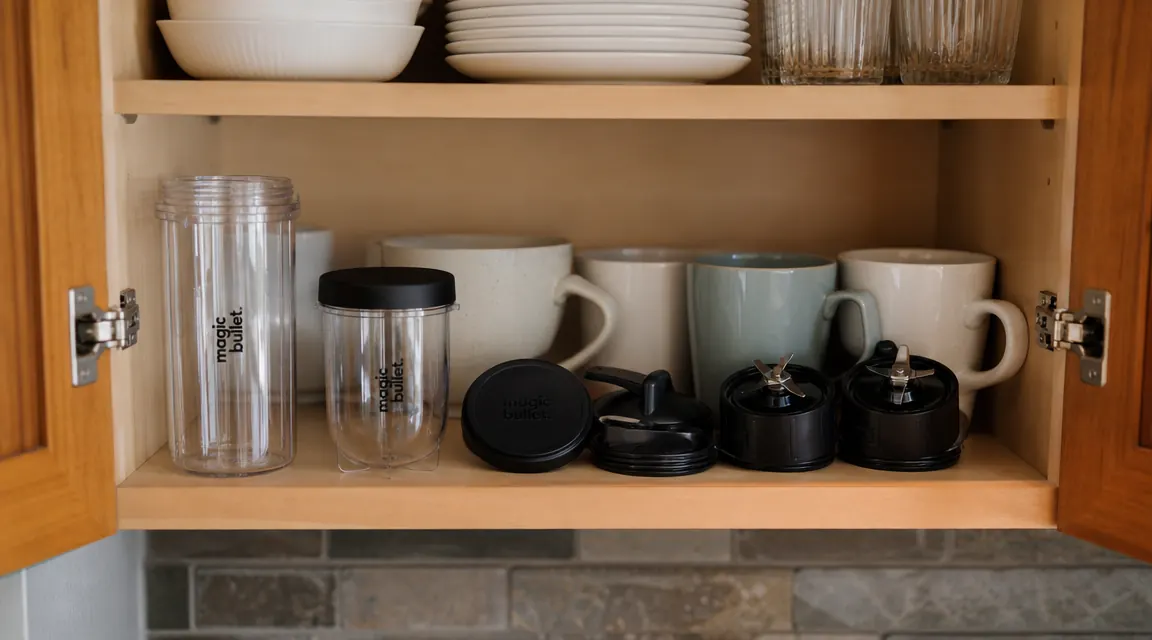
The footprint also matters in small kitchens. The Magic Bullet's base is compact and low-profile. It slides easily into a corner or under a cabinet overhang where a taller blender would not fit. And because the cups serve as both the blending vessel and the drinking cup, you end up washing one thing instead of two, which matters a lot in a kitchen with a single-basin sink.
Where the NutriBullet Wins
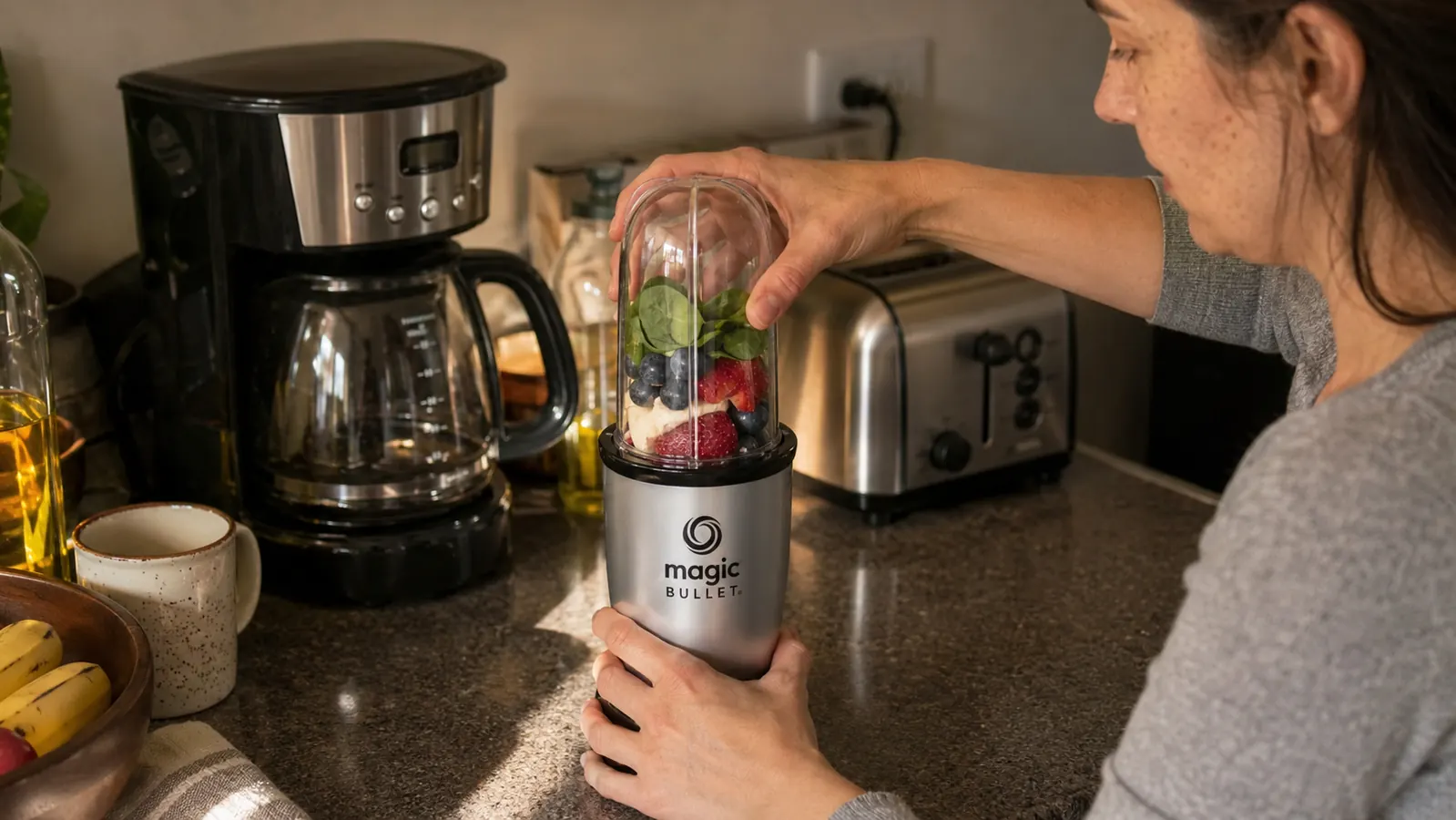
The NutriBullet's 600-watt motor is the main reason to step up. If your smoothies regularly include frozen mango, kale, or spinach in large quantities, the Magic Bullet's 250 watts will strain audibly and sometimes leave chunks behind. The NutriBullet's extractor blade and stronger motor were designed specifically for that kind of dense blending, and it handles it noticeably better. If you are making a daily green protein smoothie with a full handful of raw spinach and a cup of frozen berries, the NutriBullet is the right tool.
The 32-ounce cup is also a real advantage if you are blending for two people or prefer a larger portion. The Magic Bullet's 24-ounce tall cup is fine for a single serving, but if you want to make two large smoothies at once, the NutriBullet saves you a second run. That said, for a solo cook or a couple who does not mind two quick blends, the size difference is not a dealbreaker.
The Magic Bullet 11-piece set is the smarter buy for most small kitchens -- check today's price on Amazon.
At roughly half the cost of the NutriBullet, the Magic Bullet delivers smoothies, sauces, soups, and dry grinding with a full set of cups and accessories already included. It earns its counter space without emptying your wallet.
Amazon Check Today's Price on Amazon →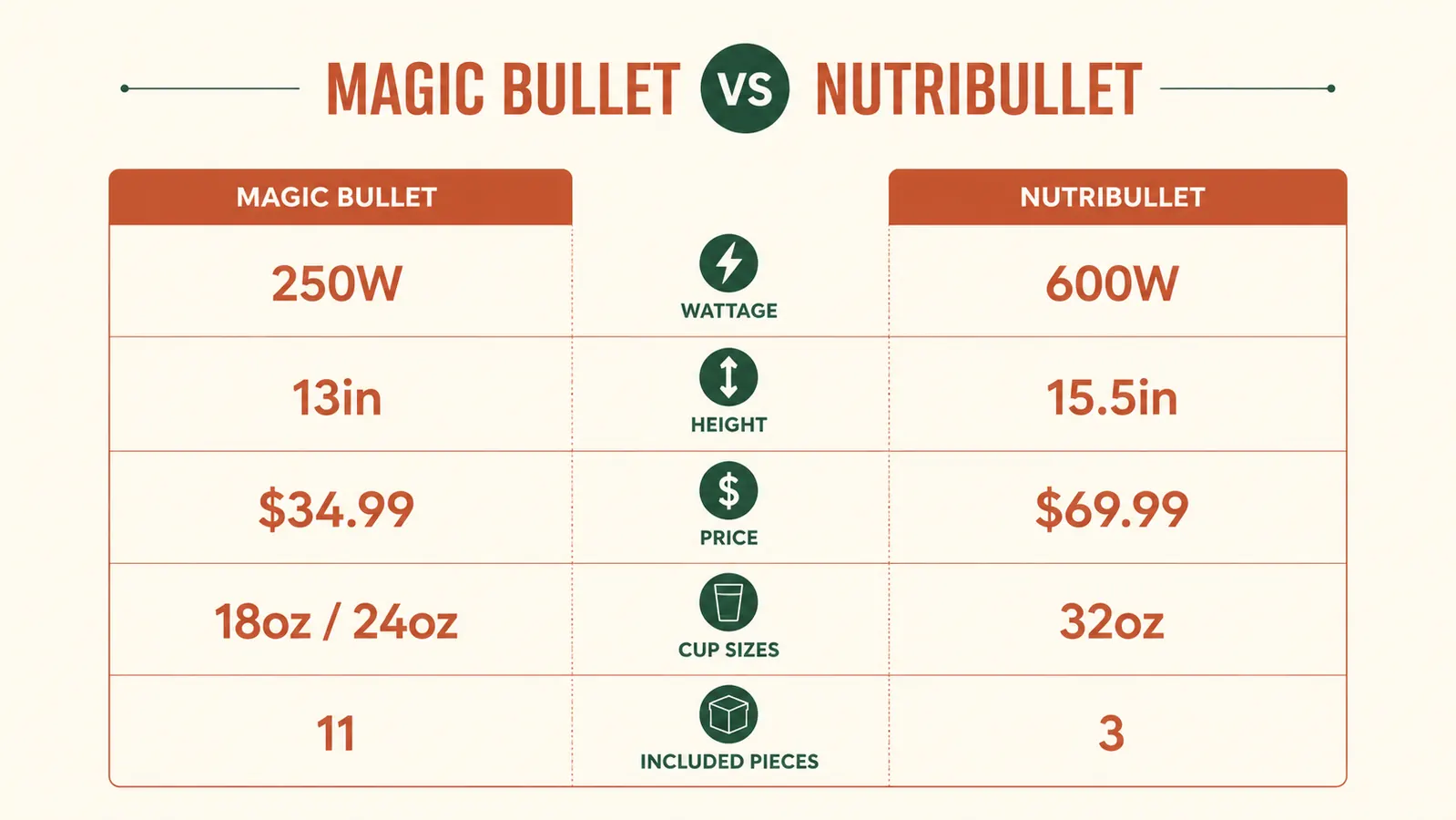
The Part Nobody Mentions: They Are the Same Brand
NutriBullet LLC makes both blenders. The Magic Bullet was the original, and the NutriBullet was introduced later as a more powerful, premium version aimed at the health-and-fitness crowd. That is worth knowing because the brand loyalty argument falls apart. You are not choosing between two competing philosophies. You are choosing between two tiers of the same product line. The upgrade you pay for is real (more watts, bigger cup) but so is the price difference. Once you understand that, the decision becomes a lot simpler.
The Magic Bullet 11-piece set gives you more ways to use a compact blender at a lower price than the NutriBullet gives you at twice the price. For a small kitchen cook who blends occasionally, that math is hard to argue with.
Real-World Blending: What Each One Handles
To be concrete about this: I made the same smoothie in both blenders on the same morning. Half a frozen banana, a cup of fresh spinach, a handful of frozen strawberries, a scoop of protein powder, and about a cup of almond milk. The NutriBullet was done in about 20 seconds and the result was completely smooth. The Magic Bullet took closer to 40 seconds, needed one stop to scrape the sides, and left a few very small spinach flecks. Neither result was bad. The Magic Bullet's smoothie tasted the same. For my daily routine, I would not notice the difference.
Where I did notice a difference was with harder ingredients. When I tried to grind a quarter cup of oats to make oat flour in the Magic Bullet, the flat blade handled it just fine in about 30 seconds. The NutriBullet does not include a flat blade in its standard kit, so you would need to buy one separately or use the extractor blade in a way it is not quite designed for. That is one of those small advantages that adds up when you use a blender for more than smoothies.
I also tested both for salsa. Roughly chopped tomatoes, onion, jalapeño, cilantro, and lime juice. Both handled this easily. Both stopped before over-processing if you pulse rather than hold. The Magic Bullet's flat blade actually gave me more control here than the extractor blade on the NutriBullet, though both worked well.
Noise, Cleanup, and Counter Space
Both blenders are loud. Personal blenders in this price range are just going to be loud. The NutriBullet at 600 watts is somewhat louder, especially when working hard on frozen fruit. Neither one is what you would call apartment-quiet, but both are done in under a minute, so the noise is brief. If you live in a thin-walled apartment and your neighbors are home at 7 a.m., blend fast and apologize later.
Cleanup on the Magic Bullet is a small advantage. Because you blend and drink from the same cup, there is no blender jar to rinse. Add a little dish soap and warm water to the cup, run the blade for five seconds, and rinse. Done. The NutriBullet cup is larger, so there is a bit more to wash, but the same technique applies. Both blades are technically dishwasher safe, but I hand-wash mine because dishwasher heat can degrade the gaskets over time.
Counter space is roughly a tie in terms of the base footprint. The Magic Bullet is slightly shorter and a little less wide, which matters if you have exactly one corner spot left on your counter. The NutriBullet's taller profile means it will conflict with some under-cabinet clearances that the Magic Bullet fits under. Measure your clearance before you commit to either one.
Who Should Buy Which
Buy the Magic Bullet if: you blend a few times a week rather than every single morning, you want a versatile set that handles smoothies, soups, sauces, and dry grinding, you are on a tight budget and want the most utility per dollar, or your counter space is extremely limited and you need the smallest possible footprint. The 11-piece set is genuinely well thought out for small kitchens. Four mugs with handles means you can use it for hot soups or oatmeal too, just blend and drink from the mug with a lid. That versatility is hard to find at this price.
Buy the NutriBullet if: you make a large green smoothie with dense leafy greens and frozen fruit every single morning without exception, you want a bigger cup to blend two servings at once, or you have already tried a lower-wattage blender and found yourself frustrated by its limits. The NutriBullet is a real upgrade in power and it earns its price if you are using it hard every day. But if you are blending soft fruit and yogurt three mornings a week, you are paying for wattage you will never need.
For context, see our full long-term review of the Magic Bullet where we cover two years of daily use, or the honest review that goes deeper on where the 250-watt motor starts to struggle. Both reviews have specifics that will help you decide if you are on the fence.
For most small-kitchen cooks, the Magic Bullet 11-piece set is the right call -- see if it is still budget-priced today.
More accessories, smaller footprint, and roughly half the cost of the NutriBullet. If you blend daily staples rather than hardcore green smoothies, this is the one that makes sense for a small kitchen.
Amazon Check Today's Price on Amazon →